NOERA 2027 EXHIBITION SECTORS

Three sectors.
One connected
future.

Find your field of expertise.
Discover new connections.

Water management, geotechnical engineering and waste management – from individual technologies to integrated solutions for infrastructure, industry and the environment.
21–23 September 2027
Zagreb Fair, Zagreb
01 / 03
Sustainable management of water resources
WATERWATER
02 / 03
For safe and resilient infrastructure
SOILSOIL
03 / 03
From a challenge to a valuable resource
WASTEWASTE
TECHNOLOGIES · KNOWLEDGE · BUSINESS OPPORTUNITIES

CONTENT THAT SPEAKS YOUR LANGUAGE

Find your area of expertise.

Browse the topics or search for a technology, piece of equipment or challenge that interests you.

QUICK SEARCH

This overview outlines the fields that NOERA brings together. Exhibitor listings, demonstrations and the programme schedule will be published once participation is confirmed.

01

SECTOR / WATER

ALL SECTORS

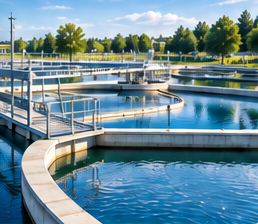
WATER

Sustainable management of water resources

From source to reuse.

The full scope of water management in one place: water resources and hydraulic engineering works, reliable water services, process equipment, laboratory analysis and digital management.

Sustainable management of water resources NOERA / 01 / 2027EXPLORE
TECHNOLOGIES AND SOLUTIONS
01Resources02Infrastructure03Treatment04Reuse

What does the WATER sector cover?

01.01Water resources and abstractionWater sources, catchments, groundwater and surface water.
  • Water source investigation and protection; surface water and groundwater abstraction.
  • Well drilling, installation and rehabilitation; water resource investigations.
  • Water balance, resource availability and sustainable catchment management.
  • Hydrological and hydrogeological measurements, models and water quality monitoring.
01.02Hydraulic engineering and marine structuresWatercourses, dams, reservoirs and coastal infrastructure.
  • River engineering and watercourse restoration; canals, weirs and sluices.
  • Dams, reservoirs, flood retention basins and hydropower schemes.
  • Marine and harbour structures; coastal protection, breakwaters and submarine outfalls.
  • Sediment management, hydraulic modelling and specialist construction equipment.
01.03Floods, droughts and stormwaterProtecting land and adapting to climate risks.
  • Flood protection; pumping stations, mobile barriers and early warning systems.
  • Urban drainage, retention and infiltration systems.
  • Blue-green infrastructure and nature-based solutions.
  • Drought management, water retention and catchment resilience planning.
01.04Irrigation and land drainageHydraulic engineering solutions for agricultural land.
  • Irrigation systems, pumping stations, water distribution and storage.
  • Surface and subsurface drainage of agricultural land; drainage pipes and channels.
  • Water consumption and soil moisture measurement; water demand management.
  • Filtration, automation and irrigation water quality monitoring.
01.05Water supply and seweragePipes, valves, storage tanks and complete network systems.
  • Pipes and connectors, water supply valves, hydrants and fittings.
  • Service reservoirs, storage tanks, inspection chambers and associated equipment.
  • Gravity, pressure and vacuum sewerage; connections and domestic systems.
  • Materials, protective coatings, sealing and installation equipment.
01.06Pumps and mechanical equipmentWater, air and sludge conveyance, and plant equipment.
  • Borehole, centrifugal, submersible and dosing pumps; sludge pumps.
  • Blowers, compressors, mixers and aeration equipment.
  • Bar screens, sieves, conveyors and mechanical pretreatment equipment.
  • Electric motor drives, control systems, servicing and energy optimisation.
01.07Drinking, industrial and process waterPreparing water of the right quality for every application.
  • Filtration, adsorption, ion exchange and membrane processes.
  • Disinfection, oxidation and chemical preparation.
  • Desalination and concentrate treatment; industrial water circuits.
  • Process and high-purity water; modular and mobile treatment plants.
01.08Wastewater treatmentMunicipal and industrial plants, from pretreatment to final treatment.
  • Mechanical, biological and physicochemical treatment processes.
  • Nutrient removal, membrane bioreactors and decentralised systems.
  • Advanced micropollutant treatment; technologies for PFAS and microplastics.
  • Process control, refurbishment and efficiency improvements at existing treatment plants.
01.09Sludge, reuse and recoveryConnecting water processes with the circular economy.
  • Sludge thickening, stabilisation, dewatering and drying.
  • Anaerobic treatment, biogas, and energy and heat recovery.
  • Recovery of nutrients and other resources from water and sludge.
  • Water treatment for reuse and closed-loop industrial water systems.
01.10Laboratories, analysis and measurementLaboratory and field equipment, reagents and consumables.
  • Laboratory fit-out; analytical instruments and automated sampling.
  • Physicochemical and microbiological analysis of water, wastewater and sludge.
  • Field instruments, probes, sensors and continuous monitoring systems.
  • Reagents, standards, laboratory ware, filters and other consumables.
  • Sample preparation and preservation, calibration, servicing and laboratory information systems.
01.11Water losses and asset managementInfrastructure diagnostics, renewal, maintenance and financing.
  • Water meters, district metering, pressure management and active leak detection.
  • Pipeline inspection, cleaning, rehabilitation and renewal, including trenchless methods.
  • Asset management, investment priorities, service life and maintenance costs.
  • Water sector financing, project preparation and investment models.
01.12Digitalisation and water system securityData and automation for reliable real-time operation.
  • SCADA, telemetry, IoT sensors and remote control systems.
  • GIS, hydraulic models, digital twins and artificial intelligence.
  • Real-time control, predictive maintenance and operational analytics.
  • Cybersecurity, protection of operational systems and continuity of service.

WHAT CAN BE SHOWCASED

From exhibit
to practical solution.

Pumps, valves and pipe sections; measuring instruments and analysers; membranes and process modules; infrastructure models and digital solutions.

SUGGESTED DISCUSSION TOPICS

  • How can we reduce water losses and improve asset management?
  • How can water quality, energy efficiency and reuse be integrated?
  • How can resilient infrastructure and its financing be planned?
WHO IS IT FOR?

Manufacturers and suppliers, water service providers, industry, water management authorities, designers, contractors, laboratories and researchers.

02

SECTOR / SOIL

ALL SECTORS

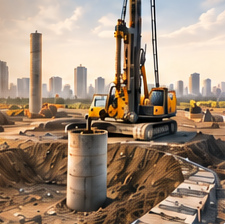
SOIL

For safe and resilient infrastructure

Reliability starts below the surface.

Geotechnical engineering that connects investigation, design, construction and monitoring of ground and structural behaviour. From foundations and tunnels to slope stabilisation and contaminated site remediation.

For safe and resilient infrastructure NOERA / 02 / 2027EXPLORE
TECHNOLOGIES AND SOLUTIONS
01Investigation02Design03Construction04Monitoring

What does the SOIL sector cover?

02.01Geotechnical and hydrogeological investigationsUnderstanding soil, rock and groundwater.
  • Exploratory drilling, coring, and soil and rock sampling.
  • Geophysical investigations and spatial characterisation of the subsurface.
  • Hydrogeological investigations, piezometers and groundwater monitoring.
  • Drilling equipment, accessories, tools and planning of site investigations.
02.02Laboratory and field testingInstruments and data for sound design decisions.
  • Equipment for testing soil, rock, aggregates and geosynthetics.
  • CPT/CPTu, SPT, dilatometer, pressuremeter and other in situ tests.
  • Foundation and pile load testing, compaction testing and permeability testing.
  • Data acquisition, calibration, analysis of results and reporting.
02.03Foundations and excavation supportMachinery, systems and solutions for demanding construction projects.
  • Shallow and deep foundations; bored and driven piles, and micropiles.
  • Diaphragm walls, sheet piles, anchors, struts and retaining systems.
  • Shoring, excavation support and temporary works.
  • Equipment for foundation construction and quality control.
02.04Ground improvement and stabilisationTechnologies to control bearing capacity, deformation and permeability.
  • Grouting and jet grouting; deep soil mixing.
  • Compaction, vibro techniques, stone columns and preloading.
  • Binders, grouts and stabilisation materials.
  • Drainage, groundwater lowering and seepage control.
02.05Geosynthetics and geotechnical materialsSeparation, reinforcement, filtration and sealing.
  • Geotextiles, geogrids, geomembranes and geocomposites.
  • Drainage and bentonite systems, and erosion protection.
  • Reinforced soil, gabions and surface stabilisation systems.
  • Testing, installation and quality control of geosynthetic systems.
02.06Slopes, landslides, embankments and damsStructural safety and resilience of the built environment.
  • Landslide stabilisation and rock slope protection.
  • Anchoring, mesh, barriers and rockfall protection.
  • Embankments and embankment dams: stability, sealing, drainage and seepage.
  • Seismic and climate risks, hazard assessment and remediation works.
02.07Tunnels and underground structuresEquipment and methods for working below ground.
  • Tunnel excavation, support, grouting and sprayed concrete.
  • Microtunnelling, pipe jacking and horizontal directional drilling.
  • Waterproofing, drainage, ventilation and worksite safety.
  • Equipment for underground construction, guidance and supervision.
02.08Soil and groundwater remediationSite rehabilitation and responsible redevelopment.
  • Investigation and characterisation of contaminated sites.
  • On-site and off-site soil treatment; physical, chemical and biological processes.
  • Groundwater remediation, containment barriers and excavated material management.
  • Risk assessment, monitoring and brownfield redevelopment.
02.09Monitoring, models and digital geotechnicsLinking measurements to structural behaviour.
  • Inclinometers, extensometers, piezometers and geodetic displacement monitoring.
  • Remote sensing, drones, laser scanning and satellite data.
  • Geotechnical analysis, GIS, BIM and digital twins.
  • Automated monitoring, alerts and risk management throughout a structure’s service life.

WHAT CAN BE SHOWCASED

From exhibit
to practical solution.

Drilling and grouting equipment; geosynthetics and anchoring systems; material samples; laboratory and field instruments; sensors and digital models.

SUGGESTED DISCUSSION TOPICS

  • How can site investigations, design and construction be better integrated?
  • How can risks affecting landslides, embankments and underground structures be monitored?
  • How can a contaminated site be remediated and safely redeveloped?
WHO IS IT FOR?

Geotechnical firms and contractors, machinery and materials manufacturers, designers, laboratories, infrastructure investors, asset managers and researchers.

03

SECTOR / WASTE

ALL SECTORS

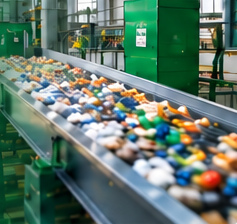
WASTE

From a challenge to a valuable resource

New value in every stream.

Solutions that connect waste prevention, collection, treatment and recovery. Materials, equipment and data for more efficient systems and a circular economy.

From a challenge to a valuable resource NOERA / 03 / 2027EXPLORE
TECHNOLOGIES AND SOLUTIONS
01Prevention02Collection03Treatment04Recovery

What does the WASTE sector cover?

03.01Waste prevention and reuseLonger product lives, less waste.
  • Ecodesign, repairability and product reuse models.
  • Centres for reuse, repair and equipment refurbishment.
  • Returnable packaging, reuse systems and food waste prevention.
  • Monitoring material efficiency and educating users.
03.02Waste collection and municipal logisticsFrom containers to a reliable transport system.
  • Containers, underground collection systems, municipal vehicles and vehicle bodies.
  • Separate collection, recycling centres and transfer stations.
  • Container washing, surface cleaning and vehicle servicing.
  • Route optimisation, quantity measurement and electrification of municipal vehicle fleets.
03.03Sorting and mechanical processingSeparating waste streams and preparing high-quality materials.
  • Crushers, shredders, screens, balers and conveyors.
  • Magnetic, eddy-current, optical and other separators.
  • Robotic sorting and AI-based sorting.
  • Quality control of input and output materials, and sorting line automation.
03.04Material recovery and recyclingTechnologies that return materials to use.
  • Recycling of plastics, paper, cardboard, metals and glass.
  • Washing, separation, regranulation and preparation of secondary raw materials.
  • Processing of textiles, wood, rubber and multi-component materials.
  • Testing the quality of recycled materials and connecting with industrial users.
03.05Biowaste, composting and biogasBiological waste streams in the circular economy.
  • Separate collection, pretreatment and preparation of biowaste.
  • Composting and anaerobic treatment; biogas processing and utilisation.
  • Digestate and process water treatment, and odour control.
  • Measurement of process conditions and monitoring of output quality.
03.06Sludge and industrial residuesTreatment, stabilisation and recovery options.
  • Sludge preparation, stabilisation, dewatering and drying.
  • Biological, physicochemical and thermal treatment.
  • Recovery of phosphorus, energy and other useful constituents.
  • Characterisation of residues and selection of further management options according to their properties.
03.07Construction waste and recycled aggregatesConnecting material recovery with construction.
  • Selective demolition and separation of materials.
  • Mobile and stationary lines for aggregate crushing, screening and washing.
  • Concrete, brick, asphalt and excavated material management.
  • Testing material properties and assessing suitability for reuse.
03.08Hazardous and industrial wasteSpecialist systems for challenging waste streams.
  • Characterisation, classification and safe temporary storage.
  • Specialised packaging, transport and handling equipment.
  • Physicochemical treatment, stabilisation and solidification.
  • Waste oils, solvents, chemicals and other specific industrial waste streams.
03.09Electronic waste, batteries and vehiclesRecovery of valuable and critical raw materials.
  • Collection, dismantling and preparation of electrical and electronic equipment.
  • Safe battery handling and treatment equipment.
  • Metal recycling and recovery of critical raw materials.
  • Treatment of end-of-life vehicles, and traceability of parts and materials.
03.10Energy recovery and residual waste treatmentEnergy from streams unsuitable for material recovery.
  • Preparation of waste-derived fuels and control of their properties.
  • Thermal treatment, energy recovery and heat utilisation.
  • Pyrolysis and gasification according to feedstock type and properties.
  • Flue gas cleaning and monitoring of emissions and treatment residues.
03.11Landfills and site remediationEnvironmental protection during operation and after closure.
  • Lining and drainage systems; leachate collection and treatment.
  • Landfill gas collection, treatment and utilisation.
  • Landfill capping, closure and remediation.
  • Monitoring groundwater, gas, settlement and other indicators.
03.12Digital management and resource marketsTraceability, data and new models of collaboration.
  • Weighing, RFID, sensors, records and digital traceability of waste streams.
  • Process automation, analytics and capacity planning.
  • Secondary raw material platforms and industrial symbiosis.
  • Life cycle data, digital product passports and investment models.

WHAT CAN BE SHOWCASED

From exhibit
to practical solution.

Municipal vehicles and containers; crushers, screens and separators; robotic modules and sensors; equipment for biowaste and sludge; samples of recovered materials.

SUGGESTED DISCUSSION TOPICS

  • How can we improve the quality of separately collected and recycled materials?
  • How can we select the right treatment process for a specific waste stream?
  • How can traceability, costs and the market for secondary raw materials be connected?
WHO IS IT FOR?

Municipal service providers, waste collectors and treatment operators, recyclers, equipment manufacturers, industry, designers, investors, the public sector and development teams.

THE POWER OF CONNECTION

Challenges do not stop
at sector boundaries.

NOERA connects disciplines where they meet in real projects. A single challenge often requires expertise, equipment and partners from several sectors.

SOIL + WASTE

Remediated sites and new materials

Geotechnical solutions, contaminated soil remediation and testing of recycled aggregates connect site rehabilitation with material recovery.

Themes shared by all sectors

Digitalisation and security

Data, models, automation and cyber resilience.

Analysis and monitoring

Laboratory evidence and continuous field monitoring.

Climate and resilience

Infrastructure reliability, prevention and risk management.

Investment and the life cycle

Financing, maintenance and long-term asset value.

FROM TOPICS TO CONNECTIONS

Your sector.
More ways to experience it.

Exhibits, expert discussions, practical demonstrations and business networking come together in the NOERA concept.
EXPO – illustration of the fair conceptEXPO

Exhibition spaces

Equipment, materials, systems and solutions presented through direct conversations with their manufacturers and suppliers.

NOERA BLUE ROOM – illustration of the fair conceptNOERA BLUE ROOM

Knowledge and professional dialogue

NOERA TALKS, TECH LIVE, CASE STUDY and round-table discussions connect practical experience with new approaches.

NOERA LIVE – illustration of the fair conceptNOERA LIVE

Technologies in action

Outdoor displays of machinery and equipment, with demonstrations subject to technical feasibility and a confirmed schedule.
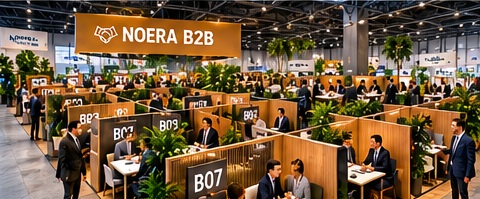
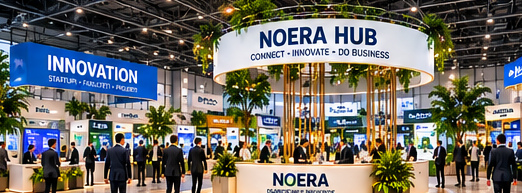
NOERA HUB – illustration of the fair conceptNOERA HUB

B2B, innovation and partnerships

Business meetings, start-up presentations, the PITCH zone and Business Lounge connect market needs with new solutions.

NOERA GREEN STREET complements the fair with food and drink, informal business meetings and an afterwork programme.

These programme formats describe the planned concept. Exhibitors, speakers, demonstrations and timings will be announced once confirmed.

A PLACE FOR YOUR TECHNOLOGY

Found your field of expertise?
Explore ways to take part.

NOERA is designed for companies and professionals from Croatia, the region, Europe and worldwide. Present your offering in a context that makes its application clear.

NOERA 2027

21–23 September 2027

Zagreb Fair, Zagreb

A new era of environmental technologies

ORGANISERS

University of Zagreb
Faculty of Civil Engineering

Civil Engineering Faculty Center